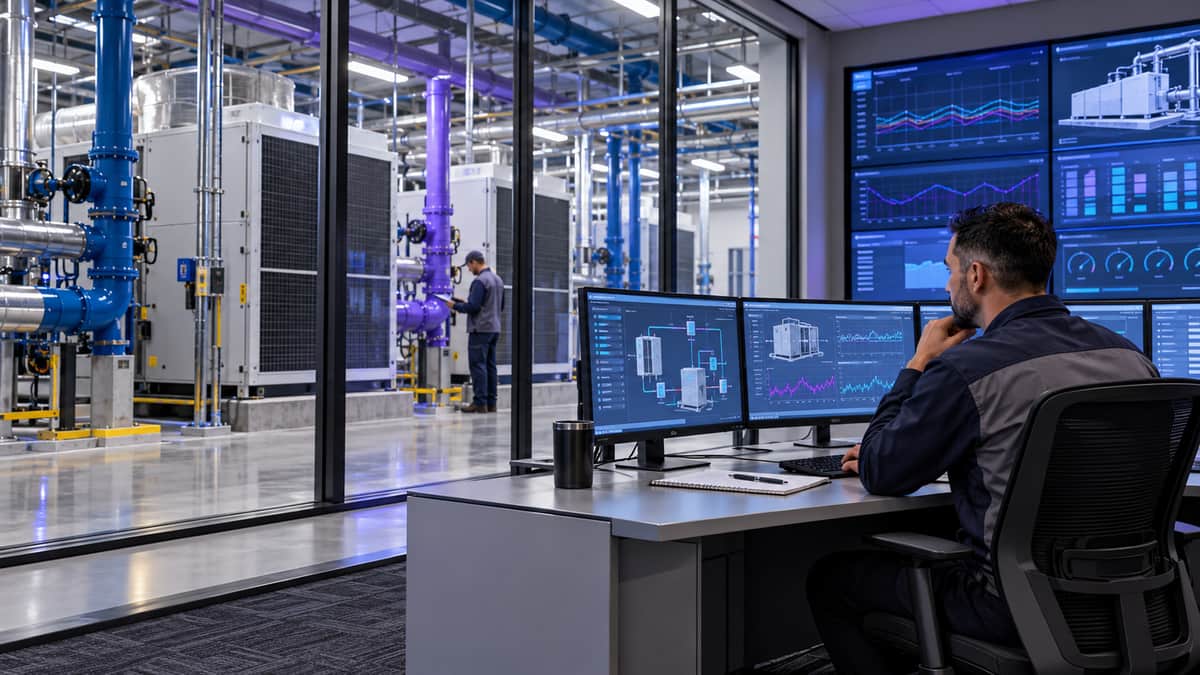
The Operational Question
When a data center fire alarm system is tested before handover, is the team proving a complete, documented chain of cause and effect, or only confirming that a horn and strobe operate? A detector, manual station, supervisory switch, waterflow input, clean-agent release sequence, HVAC shutdown, access-control action, monitoring notification, and operator response may all be connected. A missed relationship can leave a real event poorly managed, create an unwanted interruption, or force operators to improvise during a high-pressure alarm.
This article gives commissioning agents, facility managers, fire-protection specialists, and operations leads a practical way to review a fire alarm cause-and-effect test. It explains what to map before the test, what to watch during each scenario, how to separate an alarm from a release, and what evidence should remain in the handover package. The goal is not to prescribe a local fire-code design or replace the authority having jurisdiction. The goal is to help the data center team verify that the installed system, approved sequence, site procedures, and trained people agree with one another before the facility moves into routine operations.
Who This Affects
This work affects more than the fire-alarm vendor. It applies to the people who will accept, operate, maintain, or audit the facility after construction is complete:
- Commissioning agents coordinating integrated systems testing across fire alarm, clean-agent suppression, HVAC, generators, UPS rooms, security, and the building management system.
- Facility managers and critical facilities engineers responsible for approving turnover documents, managing impairments, and deciding whether an exception is safe to carry into operations.
- Electrical, mechanical, and controls technicians who may receive a fire alarm while working in switchgear rooms, battery rooms, generator areas, cooling plants, or data halls.
- Security and compliance leads who need to confirm that doors, mantraps, visitor controls, cameras, alarm monitoring, and emergency communications respond as the approved sequence requires.
- Operations and NOC staff who may be the first people to see a remote alarm, acknowledge it, dispatch a responder, or coordinate with a customer and emergency services.
- Enterprise, colocation, hyperscale, and edge sites where the system may have different zones, occupancies, staffing models, monitoring paths, and contractual response requirements.
The situations are especially important during a new build, a major fit-out, a suppression-system modification, a panel replacement, a change to room use, or a handover where the operations team is new to the building. A site can be technically complete while the people, drawings, labels, and response instructions are still out of alignment.
What Can Go Wrong
The most common weakness is testing devices individually without proving the sequence between systems. A smoke detector may show an alarm at the panel, while the expected fan shutdown, door release, signal to the monitoring center, or operator notification is never observed. The result is a test report that looks complete because every device has a checkmark, even though the facility has not demonstrated the actions that matter to life safety, equipment protection, or orderly operations.
Several failure modes deserve close attention:
- The wrong response occurs in the wrong room. Zone names, point labels, or graphics may be copied from an earlier drawing. An operator may dispatch to a data hall when the event is in a battery room, or silence the wrong notification group.
- A supervisory signal is treated like a fire alarm. Valve tamper, low pressure, panel trouble, loss of communications, and disabled equipment can require a different action from a confirmed alarm. If the labels and procedures blur these conditions, response quality falls.
- A release sequence is assumed rather than proven. A clean-agent system may include pre-alarm, time delay, abort, manual release, ventilation shutdown, damper action, door status, and discharge indication. A facility should not infer that one successful alarm test proves every release-related interface works.
- Equipment is left in test or bypass. An impairment created for testing can remain active after the vendor leaves. A disabled point, isolated notification circuit, closed valve, bypassed interlock, or muted remote connection can turn a short test window into an operational exposure.
- A nuisance alarm creates an unsafe habit. If repeated false signals cause staff to silence, delay, or ignore alarms, the team may normalize an unsafe response. The corrective action should address the initiating condition and the sequence, not simply make the indication disappear.
- The evidence cannot support handover. Missing timestamps, point IDs, witness names, photographs, exception numbers, or retest results make it difficult to prove what was tested and whether an open item was actually closed.
Standards and local requirements matter, but a course, vendor manual, or blog article cannot determine the legally applicable design for a specific building. The project team should use the approved fire-protection documents, adopted codes, listing requirements, manufacturer instructions, and direction from the authority having jurisdiction. OSHA emergency-action planning requirements can inform the employer's response program, while NFPA 72 and NFPA 2001 are important reference points for fire alarm and clean-agent system work. They do not make a training course an approval, certification, or substitute for qualified design and inspection.
What Managers Should Check
Before the first live scenario, the manager should ask the commissioning team to assemble one controlled test plan and one current cause-and-effect matrix. The matrix should use the installed point names and equipment identifiers, not only generic labels from a design narrative. At minimum, the plan should make clear:
- Which initiating device or condition is being simulated.
- Which panel, zone, loop, or releasing control unit should receive it.
- What local indications should appear, including alarm, supervisory, trouble, pre-alarm, or release status.
- Which notification appliances and remote monitoring paths should operate.
- Which HVAC, damper, door, access-control, generator, UPS, or other interfaces should change state.
- Which actions are intentionally not part of that scenario.
- Who is authorized to place a system in test, who can acknowledge or reset it, and who verifies restoration.
Then walk the sequence in a disciplined order.
- Confirm the test boundary. Identify the room, zone, equipment, customer-impact risk, active impairments, temporary protections, and communications plan. Notify the people who could interpret the test as a real event, including the monitoring center and the operations desk.
- Verify the baseline. Record panel status, releasing-system status, valve position where applicable, suppression pressure indications, remote communications, BMS and DCIM visibility, and the normal state of affected equipment. Photograph or export the baseline when the project procedure allows it.
- Test initiating devices by scenario. Use approved test methods for smoke detection, heat detection, manual stations, waterflow, supervisory switches, and other installed inputs. Avoid treating an input as complete until the expected point description and location are verified at the panel and operator interface.
- Observe the first response. Confirm annunciation, audible and visual notification, panel text, event priority, zone description, and time. Have a witness read the expected result from the matrix while another person records what actually happened.
- Verify interfaces without guessing. Check the specified fan, damper, air-handler, door, access-control, elevator, generator, or other action. If an interface is intentionally disabled during a test, record that limitation rather than marking the action passed.
- Separate alarm, pre-alarm, and release. Confirm the time delay, abort behavior, manual release behavior, warning devices, shutdowns, and discharge indication according to the approved sequence and the manufacturer's instructions. Do not discharge an agent merely to create a dramatic demonstration; use the approved test method and the qualified service provider.
- Check the human handoff. Ask the control-room operator to describe the response without prompting: where the event is, what the event type is, what must be protected, who must be contacted, and what conditions must be met before reset or re-entry. A readable panel is not enough if the procedure is ambiguous.
- Restore and retest the boundary. Remove test modes, re-enable points, restore normal valve and release status, clear temporary bypasses, confirm remote monitoring, and verify that no trouble or supervisory signal remains unexplained. Recheck the systems affected by the test rather than assuming reset equals normal.
For every failed or incomplete step, assign an owner and a precise retest condition. “Fire alarm issue” is not a useful action item. “FA-2 point 17 displayed a generic alarm instead of Battery Room 1 smoke detector; update point text, verify graphics, and repeat the alarm-to-notification scenario” is actionable. Managers should distinguish a documentation correction from a functional failure, and both from an impairment that requires interim protection.
The handover evidence should normally include the approved matrix, test scripts, device and interface results, panel event logs, remote-monitoring confirmation, open-item register, retest records, as-built drawings, operating procedures, impairment records, vendor manuals, training attendance, and a clear statement of what remains outside the test scope. The exact package depends on the project and jurisdiction, but the principle is consistent: a future operator should be able to reconstruct what was tested and what to do when the same signal appears at 2 a.m.
Which Training Fits This Situation
This is a cross-functional handover problem, so the right plan should match responsibilities rather than assign the same depth to every person. A commissioning agent or project lead may need the broader sequence and documentation view. A control-room operator needs to recognize event types, follow the response procedure, communicate clearly, and restore only when authorized. A technician needs to understand the equipment interface and the boundaries of work. A security lead needs to understand access and notification behavior during an alarm.
The site catalog offers several relevant knowledge courses:
- Infrastructure Commissioning & Startup fits project leads and commissioning personnel who must coordinate functional testing, integrated sequences, documentation, and readiness for operations.
- Data Center Fire Suppression System Safety Training (Clean Agent Systems) fits staff who need a foundation in clean-agent hazards, pre-alarm and release concepts, room conditions, and safe response expectations.
- Incident Response & Troubleshooting fits operations and NOC personnel who need a repeatable method for triage, escalation, evidence capture, and recovery after an alarm or system fault.
- Security & Compliance for Data Centers and Access Control & Physical Security can support teams responsible for badge access, doors, mantraps, visitor control, and audit evidence during emergency events.
For a security and compliance lead building a broader role-based plan, the Security & Compliance Bundle can provide a structured foundation across physical security, fire safety, and environmental compliance. A site may instead choose individual courses when the commissioning group already has deep fire-protection expertise and only operations staff need targeted preparation. These are self-paced knowledge courses, not certification exams. A learner receives a certificate of completion, which supports a training program but does not certify a system, approve a design, grant a license, or represent an endorsement by OSHA, NFPA, or another standards body.
A practical plan can combine a pre-handover briefing, the relevant online course, a site-specific tabletop, and a witnessed drill using the actual matrix. Completion records should be mapped to roles and tasks. The test itself remains the place to validate the installed system; training prepares people to understand the sequence and respond consistently.
Common Mistakes to Avoid
- Starting with a device list instead of the approved sequence of operations.
- Letting the vendor, controls contractor, security team, and operations team keep separate versions of the matrix.
- Using generic labels such as “smoke alarm” when the operator needs a room, zone, or equipment identifier.
- Testing a release interface without confirming the test method, authorization, temporary safeguards, and restoration steps.
- Treating a panel reset as proof that every connected system returned to normal.
- Accepting a verbal statement that the monitoring center saw the signal without retaining a time-stamped confirmation.
- Closing an exception because the device worked on a second attempt when the underlying label, sequence, or procedure is still wrong.
- Scheduling the first full integrated test on a night shift without giving operators a chance to rehearse the response in a controlled setting.
- Assuming a course certificate replaces site qualification, vendor instruction, emergency drills, or local compliance responsibilities.
Key Takeaway
A successful fire alarm handover proves more than audible notification. It shows that the initiating condition, panel message, interfaces, remote signal, operator procedure, documentation, and restoration steps form one understood chain. This week, choose one high-consequence scenario, such as a smoke alarm in a battery or suppression-protected room, and walk its cause-and-effect matrix with the commissioning lead and the future control-room operator. Mark every mismatch for correction or retest before calling the sequence ready.