The Operational Question
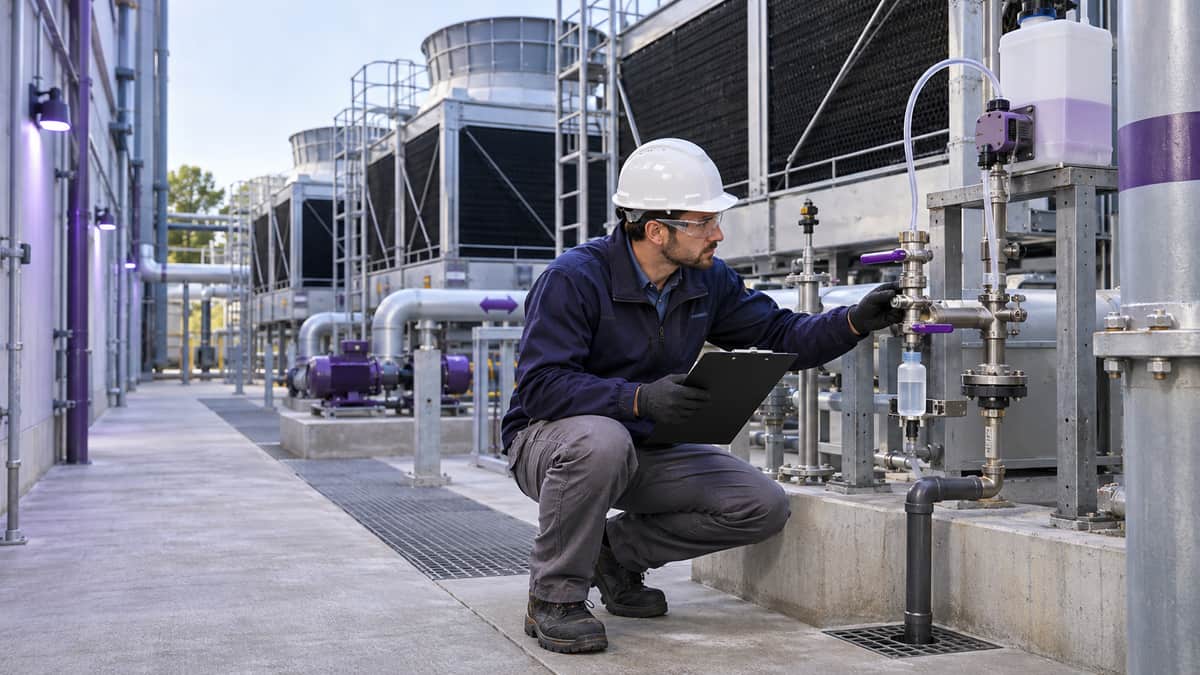
Cooling-tower blowdown looks like a routine water-treatment task, but in a data center it can affect chiller performance, condenser-water chemistry, pump operation, environmental controls, and the team's ability to maintain cooling capacity. A technician may only need to open a valve or confirm an automatic controller, yet the work can change water flow, chemical concentration, discharge conditions, and the operating margin of a plant that supports critical loads.
This is the practical question: what should a facilities team verify before it starts, changes, or restores cooling-tower blowdown during a maintenance window? The answer is not a single valve position. The team needs to understand the equipment path, the water-treatment objective, the work boundary, the control sequence, and the recovery checks. This guide gives facility managers, mechanical technicians, controls specialists, EHS staff, and operations teams a repeatable readiness review for planned chemical service or troubleshooting.
The goal is not to prescribe a universal blowdown rate or chemical setpoint. Those values depend on the plant design, water source, treatment program, manufacturer requirements, discharge rules, and qualified water-treatment support. The goal is to make sure the team can explain what it is changing, why the change is needed, how cooling resilience will be protected, and what evidence will show that the system returned to a stable state.
Who This Affects
This topic matters to teams operating enterprise, colocation, hyperscale, and edge facilities with open cooling towers, evaporative heat rejection, condenser-water loops, or related water-treatment systems. It also applies to facilities that use a contractor for chemical dosing, testing, filter service, tower cleaning, or discharge work while the data center team remains accountable for operational coordination.
The roles most likely to participate include:
- Facility managers approving the work package, service window, vendor scope, and operating risk.
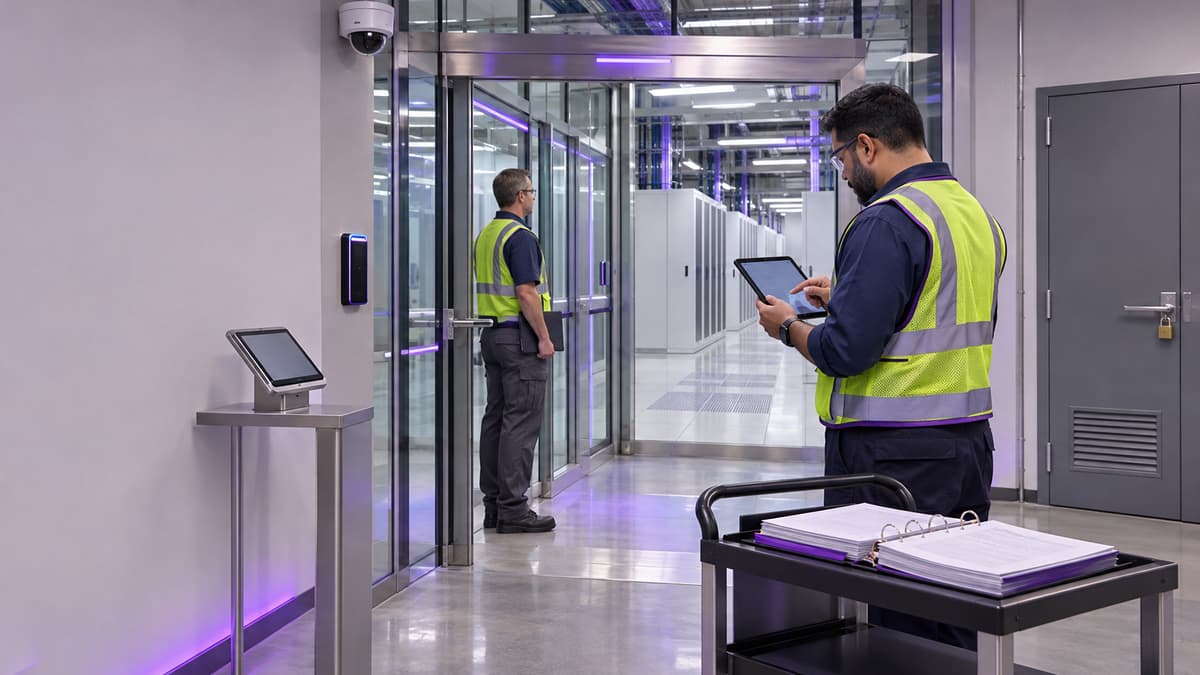
- HVAC and mechanical technicians inspecting pumps, strainers, valves, tower basins, fill, conductivity probes, sample points, and drain paths.
- Controls technicians verifying the BMS sequence, automatic blowdown command, alarm priority, trend data, and manual override status.
- Water-treatment specialists interpreting conductivity, cycles of concentration, corrosion-control results, biocide records, and chemical-feed performance.
- EHS managers reviewing chemical inventory, safety data sheets, exposure controls, spill response, waste or discharge requirements, and worker training.
- NOC and site operations staff watching supply temperatures, chiller status, pump status, alarms, and customer-impact indicators while the work proceeds.
- Commissioning agents and contractors validating a new tower, condenser-water loop, controller, or treatment system before handover.
- Training coordinators building role-based development for technicians who understand general HVAC work but are new to critical-facilities cooling plants.
The same review can be scaled for a small edge site or a multi-building campus. A small site may have one tower, one pump group, and a packaged controller. A hyperscale campus may have several tower cells, common headers, multiple chemical skids, remote sampling, and different operating sequences by building. The number of assets changes the checklist, but it does not remove the need to identify the exact work boundary.
What Can Go Wrong
Poor blowdown control can create both mechanical and operational problems. If too much water is discharged, the plant may waste treated water, increase chemical consumption, create avoidable wastewater volume, or operate with unstable chemistry. If too little water is discharged, dissolved solids can concentrate and contribute to scale, corrosion, fouling, poor heat transfer, or drift in treatment performance. A controller that is reading a failed or poorly located conductivity probe can make either condition look normal.
The cooling impact may not appear at the blowdown valve. A change in condenser-water flow or chemistry can affect chiller approach temperature, compressor lift, tower fan operation, pump loading, and the ability of the plant to reject heat during a high-load period. If a technician isolates a common strainer, pump, chemical feed line, or sample loop without checking the sequence, the team may reduce redundancy or create an alarm that is not understood by the control room.
Chemical service introduces additional hazards. Concentrated treatment products can irritate or burn skin and eyes, create incompatible mixing conditions, or require specific ventilation, storage, transfer, and emergency arrangements. A worker who assumes that a small dosing cabinet is low risk may skip the safety data sheet review, splash protection, or verification of the correct product. A contractor may arrive with a familiar procedure that does not match the site's chemical inventory or discharge controls.
The task can also become an energy-control problem. Pumps, fans, automatic valves, chemical-feed equipment, and connected electrical panels can start unexpectedly or retain pressure. Opening a sample line or strainer can release hot water, treated water, or stored pressure. OSHA's control-of-hazardous-energy requirements are relevant when servicing or maintaining equipment where unexpected energization, startup, or release of stored energy could cause injury. The site must apply its own written energy-control program and determine which workers are authorized for the task.
Documentation failures create a separate risk. If the actual blowdown valve, conductivity probe, chemical pump, or discharge path differs from the drawing, the next shift may act on an incorrect assumption. If a manual override remains active in the BMS, an automatic sequence may not resume after the contractor leaves. If the work order records only “tower serviced,” the team cannot later tell which cell was isolated, what readings were observed, or whether the system stabilized.
Finally, cooling-tower health controls require attention beyond the immediate mechanical task. Cooling towers can generate aerosols, and water-management programs should address system operation, cleaning, disinfection, monitoring, and response to abnormal conditions. The exact program depends on the facility and applicable requirements, but the team should not treat water chemistry records as a substitute for a broader cooling-tower management process.
What Managers Should Check
Use the following review before planned blowdown adjustment, chemical service, troubleshooting, tower cleaning, or restoration after a contractor visit. It is a readiness framework, not a replacement for the site's approved procedure or qualified water-treatment direction.
- Identify the exact asset and operating path. Record the tower cell, basin, condenser-water pump, chiller group, chemical skid, conductivity controller, blowdown valve, sample point, and discharge destination involved. Confirm the asset tag in the field against the current mechanical drawing and BMS graphic. If the work affects a common header or shared pump, identify every chiller and heat-rejection component that depends on it.
- Define the treatment objective. Write down what prompted the task: high conductivity, low conductivity, scale indicators, corrosion-control results, a failed probe, a clogged valve, chemical-feed drift, a planned clean, or a vendor recommendation. Do not start with “open the valve.” Start with the condition the team is trying to correct and the qualified person responsible for interpreting the result.
- Review current conditions before changing anything. Capture condenser-water supply and return temperatures, flow or differential pressure, pump status, tower fan status, chiller loading, conductivity, pH or other required chemistry readings, chemical tank levels, active alarms, and the number of available tower cells. Note the outdoor conditions and current IT or facility load when they are relevant to operating margin.
- Confirm redundancy and the maintenance state. Determine whether a tower cell, pump, chiller, chemical pump, controller, or sampling loop is already unavailable. A task that is acceptable with three cells operating may need a different window with one cell under repair. Confirm the expected state during the work and the state required before the team leaves.
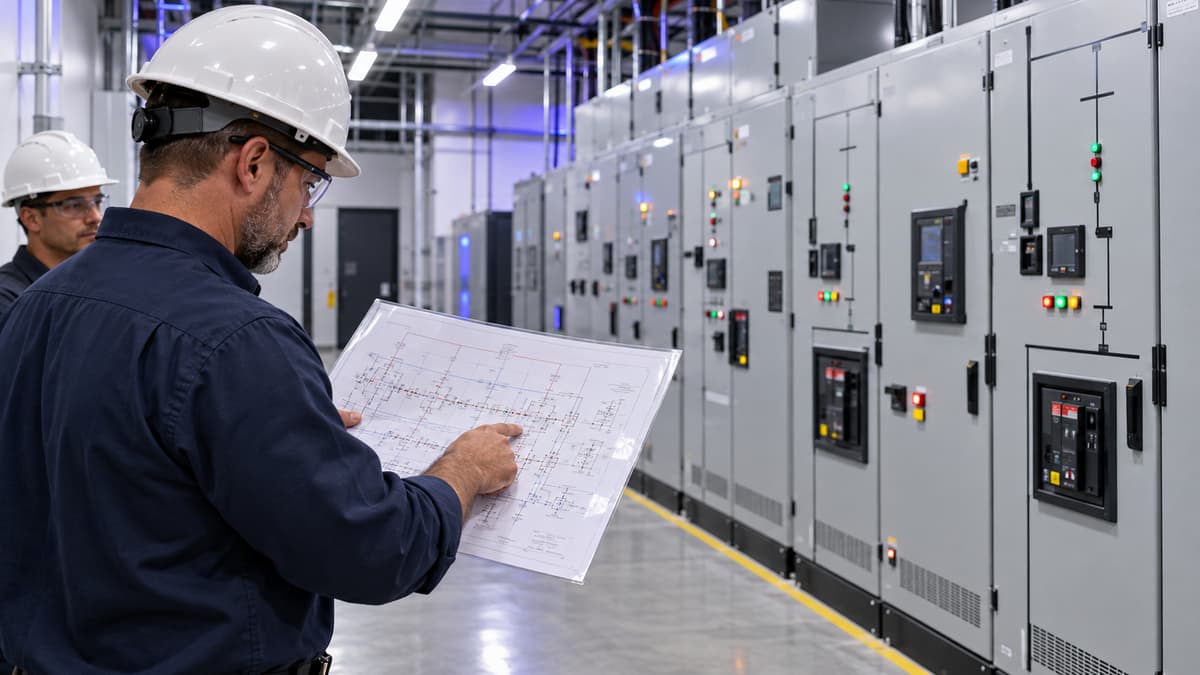
- Walk the energy and pressure boundary. Identify electrical disconnects, pump and fan controls, automatic starts, isolation valves, drain points, pressure hazards, hot surfaces, rotating equipment, and chemical-feed interfaces. Confirm the lockout/tagout or equivalent energy-control steps required by the site procedure. Test the intended zero-energy condition when the procedure calls for it, and verify that the correct device has been isolated.
- Validate chemicals and worker protection. Match the product to the treatment plan and inventory. Review the current safety data sheet, container labeling, transfer method, eyewash and shower access, splash protection, gloves, face protection, ventilation, spill kit, and incompatible-material controls. Confirm who is trained and authorized to handle the product and who will respond if a line, fitting, or container leaks.
- Check the discharge route. Verify where blowdown water goes, whether the drain is open and correctly identified, and whether the discharge is subject to site, landlord, municipal, or environmental controls. Confirm that hoses, temporary tubing, sample bottles, and drain connections are secured. Never assume that a nearby floor drain is an approved discharge point.
- Review controls and overrides. Check whether the BMS or local controller is in automatic, manual, hand, off, or maintenance mode. Confirm the conductivity setpoint, deadband, alarm limits, valve feedback, chemical-feed interlock, and time schedule against the approved sequence. Record any temporary override before work begins, assign an owner, and set a removal or verification step.
- Set hold points and communications. Decide when the technician must stop for approval. Useful hold points include unexpected flow, a rapid temperature change, an unplanned alarm, chemical mismatch, loss of a redundant pump, a failed valve, a blocked drain, or a reading outside the treatment plan. Identify the facility manager, control-room contact, water-treatment lead, and contractor supervisor before the window starts.
- Verify recovery with evidence. After the adjustment or service, confirm the intended valve position, automatic control state, chemical-feed status, conductivity trend, condenser-water temperatures, pump and fan operation, chiller response, alarm clearance, and available redundancy. Walk the area for leaks, unsecured caps, open drains, loose fittings, and tools left behind. Keep the pre-work and post-work readings with the work order.
The most useful record is specific enough for a different shift to understand what happened. It should identify the asset, work date, people involved, initial condition, change made, readings, alarms, treatment decision, final control state, remaining limitations, and follow-up owner. A water-treatment report may be attached, but it should not replace the site's operational handoff.
Which Training Fits This Situation
For a mechanical technician or facility manager who needs broader plant context, Cooling Systems Design & Optimization is a relevant foundation for understanding heat rejection, cooling capacity, system efficiency, operating modes, and the relationship between plant conditions and critical load support. It can help a team discuss why a blowdown change belongs in the same operational conversation as condenser-water temperature, chiller performance, tower fan staging, and available redundancy.
Mechanical Systems & Equipment Maintenance fits the hands-on maintenance side. It can support learning around pumps, valves, piping, water-treatment considerations, equipment condition, preventive work, and service coordination. That is useful when the job involves more than a controller adjustment, such as inspecting a strainer, verifying a sample point, preparing a tower cell for cleaning, or troubleshooting recurring flow or chemistry symptoms.
If the work involves chemical handling, discharge records, contractor controls, or environmental responsibilities, Facility Environmental Compliance can complement the mechanical courses. It gives the EHS or facility-management role a way to connect task readiness with records, site procedures, emergency response, and environmental accountability. The course is training support, not a substitute for the facility's legal, technical, or water-treatment requirements.
For a team that owns both the cooling plant and the operating program, the Cooling & Facilities Efficiency Bundle can provide a broader role-based starting point than assigning one technician a single equipment course. Managers can still supplement the bundle with site-specific instruction on the installed tower model, treatment chemistry, BMS sequence, discharge arrangements, and emergency procedures.
Build the training plan by role rather than by equipment list alone:
- A mechanical technician may need cooling-system fundamentals, equipment maintenance, energy control, chemical-handling orientation, and supervised task observation.
- A controls technician may need BMS sequence review, alarm response, override management, trend interpretation, and a practical walkthrough with the mechanical lead.
- An EHS manager may need environmental compliance, hazard communication, chemical response, contractor controls, and evidence review.
- A facility manager may need enough cooling and treatment knowledge to approve work, understand redundancy, question an unexplained reading, and verify restoration.
- A NOC operator may need alarm expectations, escalation criteria, operating-margin indicators, and the handoff information required during a plant change.
These are self-paced knowledge and best-practice courses. They support a site's training program and can provide a certificate of completion, but they do not replace qualified supervision, manufacturer instructions, site authorization, or the work practices required by the employer.
Common Mistakes to Avoid
- Treating conductivity as the only health indicator and ignoring flow, temperature, pump condition, visual inspection, or treatment history.
- Changing a blowdown setpoint without confirming the correct tower cell, probe location, controller mode, and approved treatment objective.
- Assuming the BMS graphic reflects the field installation when valve tags, drain routing, chemical pumps, or common headers have changed.
- Letting a contractor begin chemical service without reviewing the site's product inventory, safety data sheet, eyewash access, spill response, and discharge path.
- Isolating a pump, tower cell, or strainer without checking current redundancy and the effect on chiller or heat-rejection capacity.
- Leaving a manual override, forced valve command, disabled alarm, or temporary bypass in place after the work window.
- Recording only the final setpoint instead of the initial condition, decision basis, readings, alarms, and remaining limitations.
- Using a generic HVAC checklist that does not include control-room communications, customer-impact review, or recovery verification.
- Assuming a course completion record proves task qualification. The site still needs role authorization, supervised practice, and documented procedures.
Key Takeaway
Cooling-tower blowdown is a small physical action inside a larger reliability system. Before chemical service or a control change, the team should connect water-treatment intent to the actual tower, condenser-water path, cooling margin, energy-control boundary, chemical safeguards, discharge route, BMS state, and recovery evidence.
This week, choose one tower cell and walk the complete blowdown path with a mechanical technician, controls representative, and operations contact. Record one pre-work snapshot, identify every manual override and shared dependency, and update the procedure with the recovery checks the next shift actually needs.
Sources
- OSHA, The Control of Hazardous Energy (Lockout/Tagout), 29 CFR 1910.147
- OSHA, Hazard Communication, 29 CFR 1910.1200
- CDC, Developing a Water Management Program to Reduce Legionella Growth and Spread in Buildings
- ASHRAE, Standard 188, Legionellosis: Risk Management for Building Water Systems
- EPA, Cooling Towers and Legionella