The Operational Question
A shift handover in a data center is more than passing along a list of open work orders. The next operations crew needs a trustworthy picture of equipment condition, temporary changes, active permits, alarms, inhibited points, and decisions that still need an owner. When that picture is incomplete, the incoming operator can repeat a test, miss a degraded condition, or return equipment to normal without understanding why it was placed in a temporary state.
This checklist explains what a facility manager should make visible before a crew change, how to separate facts from assumptions, and how to connect the handover to safety and uptime. It is intended for enterprise, colocation, hyperscale, and edge facilities where electrical, mechanical, security, and NOC teams may share responsibility for the same critical environment. By the end, a manager can audit one shift-handover process, identify the information that must be reviewed face to face, and build a role-based training plan around the gaps.
Who This Affects
The handover matters most where the person receiving the shift is expected to make decisions quickly but did not witness the preceding work. Typical participants include:
- Facility managers and critical facilities managers coordinating electrical and mechanical operations.
- Control-room operators, NOC staff, and site technicians monitoring alarms from DCIM, BMS, EPMS, or local panels.
- Electricians working around switchgear, UPS systems, static transfer switches, PDUs, generators, and battery strings.
- HVAC and mechanical technicians responsible for CRAH units, chillers, pumps, cooling towers, and refrigerant-related work.
- Security and compliance leads tracking access, escorts, cameras, fire protection impairments, and contractor activity.
- EHS managers and permit coordinators overseeing lockout/tagout, hot work, confined-space, chemical, and other controlled tasks.
The process applies to a normal day shift, a night shift with a smaller crew, a weekend coverage period, and a planned maintenance window. It is especially important during construction turnover, a staffing change, a commissioning period, a severe-weather response, or an incident that leaves temporary controls in place.
Enterprise sites may have a facility engineer, electrician, and mechanical technician on the same shift. A colocation site may rely on a smaller team plus remote support. A hyperscale campus may divide responsibility among multiple buildings and control rooms. An edge site may have no full-time technician at the building. The handover method must fit the staffing model, but the critical facts still need to be visible and attributable.
What Can Go Wrong
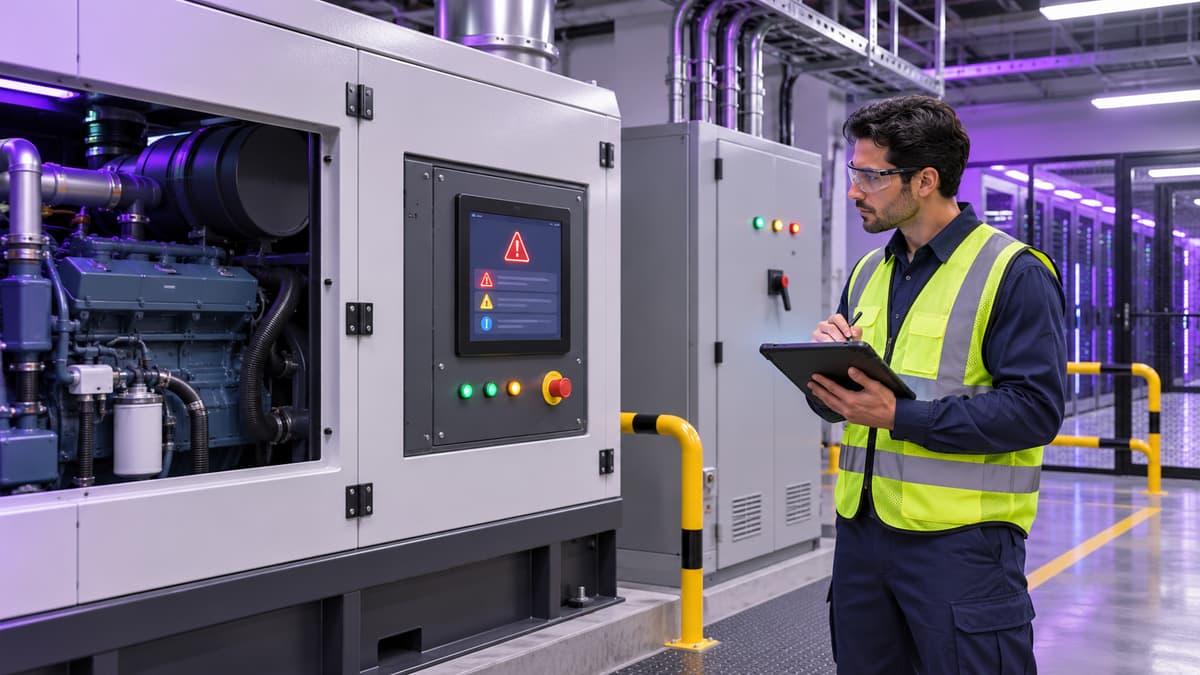
The most dangerous handover failures are usually ordinary-looking omissions. A technician knows that a breaker is being observed, a valve is manually positioned, or a sensor is bypassed, but the note says only “work in progress.” The incoming crew then sees a normal-looking screen and assumes the system is in its standard operating state.
Several consequences can follow:
- Safety exposure: A worker may enter an electrical room, mechanical space, battery room, or roof area without seeing the active permit, isolation boundary, or contractor restriction. A handover note does not replace the site’s energy-control procedure, but it should direct the incoming team to the controlling permit and verification steps.
- Alarm confusion: A BMS or DCIM alarm may be acknowledged, suppressed, or placed in an engineering mode. If the reason, owner, start time, and expected restoration are missing, a genuine alarm can be hidden inside a temporary condition.
- Uncoordinated switching: An operator may operate a transfer switch, breaker, pump, or control point based on an outdated one-line, sequence, or work plan. The risk is higher when a maintenance bypass, temporary generator connection, or test jumper is present.
- Cooling instability: A CRAH unit may be in hand mode, a chiller may be running on an unusual lead-lag arrangement, or a valve may be positioned for testing. A second technician who restores automatic control without checking the sequence can create a temperature or humidity excursion.
- Poor incident escalation: When a leak, overload, access event, or equipment fault occurs, an incoming crew may spend the first minutes reconstructing what happened instead of stabilizing the condition and contacting the correct owner.
- Weak evidence: Incomplete shift records make it difficult to show what was observed, who authorized a change, when a condition began, and whether the team completed the required follow-up. That can complicate internal reviews and customer communication.
A good handover is therefore a control point in the operating system. It does not eliminate the need for written procedures, permits, drawings, alarm management, or supervisor approval. It makes those controls easier to find before someone acts.
What Managers Should Check
Use the following framework to audit a handover. The objective is not to create a longer form. The objective is to ensure that every item the next crew could act on has a clear state, owner, and next step.
1. Make the current operating state explicit
Before the outgoing operator summarizes individual tasks, the handover should state the facility condition in plain language:
- Which utility, generator, UPS, switchgear, cooling, fire protection, and monitoring systems are in their normal configuration?
- Which systems are on maintenance bypass, alternate source, manual control, reduced redundancy, or temporary power?
- Are any spaces, aisles, battery rooms, electrical rooms, roofs, or loading areas restricted?
- Is the site operating under a severe-weather, utility, construction, or incident response posture?
The statement should identify the source of the information. A trend screen, local gauge, alarm list, logbook, and technician observation are not interchangeable. If a value has not been verified locally, label it as unverified rather than presenting it as a confirmed condition.
2. Review exceptions, not just completed work
Completed work is useful, but exceptions deserve the most attention. Ask the outgoing crew to identify every condition that differs from the approved operating state:
- Equipment out of service or operating with a degraded redundancy level.
- Temporary repairs, jumpers, bypasses, overrides, inhibited alarms, or forced points.
- Open permits, active lockout/tagout, contractor work, escorts, and barricades.
- Alarms that remain active, recurring alarms under investigation, and alarms awaiting a vendor.
- Readings that are outside the local operating envelope or trending in the wrong direction.
- Work orders that could change the risk profile if they remain unfinished.
Each exception needs four minimum fields: what changed, why it changed, who owns the next decision, and when the condition is expected to be reviewed. Add the exact equipment identifier and location so the incoming crew does not have to guess which of several similar pumps, panels, or control points is involved.
3. Tie every temporary state to a restoration plan
Temporary conditions are where handovers often fail. For each bypass, manual override, inhibited point, temporary sensor, or alternate operating mode, verify:
- The approving person or role.
- The procedure, work order, or permit governing the change.
- The controls that prevent an unplanned restoration.
- The trigger for returning to normal operation.
- The person responsible for confirming the restoration.
- The evidence that will be recorded after the change is removed.
For example, “CRAH-12 in manual” is not enough. A useful handover says why it is in manual, which fan or valve command is being held, what temperature or pressure must be watched, which technician is working on it, and what check is required before automatic control is restored. The same logic applies to a UPS maintenance bypass or a fire protection impairment.
4. Separate monitoring from field verification
Screens are essential, but they do not always show the full operating condition. A handover should distinguish between:
- A point that is normal on DCIM or BMS.
- A local reading taken at the equipment.
- A technician observation such as unusual noise, odor, vibration, heat, leakage, or physical damage.
- A condition that still needs a field check.
Managers should sample the log for this distinction. If every statement is written as if it were equally certain, the incoming crew cannot prioritize verification. A simple “verified at panel,” “verified in field,” or “remote indication only” tag can improve decision quality without adding much writing.
5. Confirm cross-team dependencies
Critical facilities work rarely stays inside one trade. A generator test can affect security access, a cooling change can affect electrical load, and a fire alarm impairment can affect both facilities and customer communication. Before the handover ends, check dependencies with the other teams:
- Has the NOC received the customer-impact or alarm-routing status?
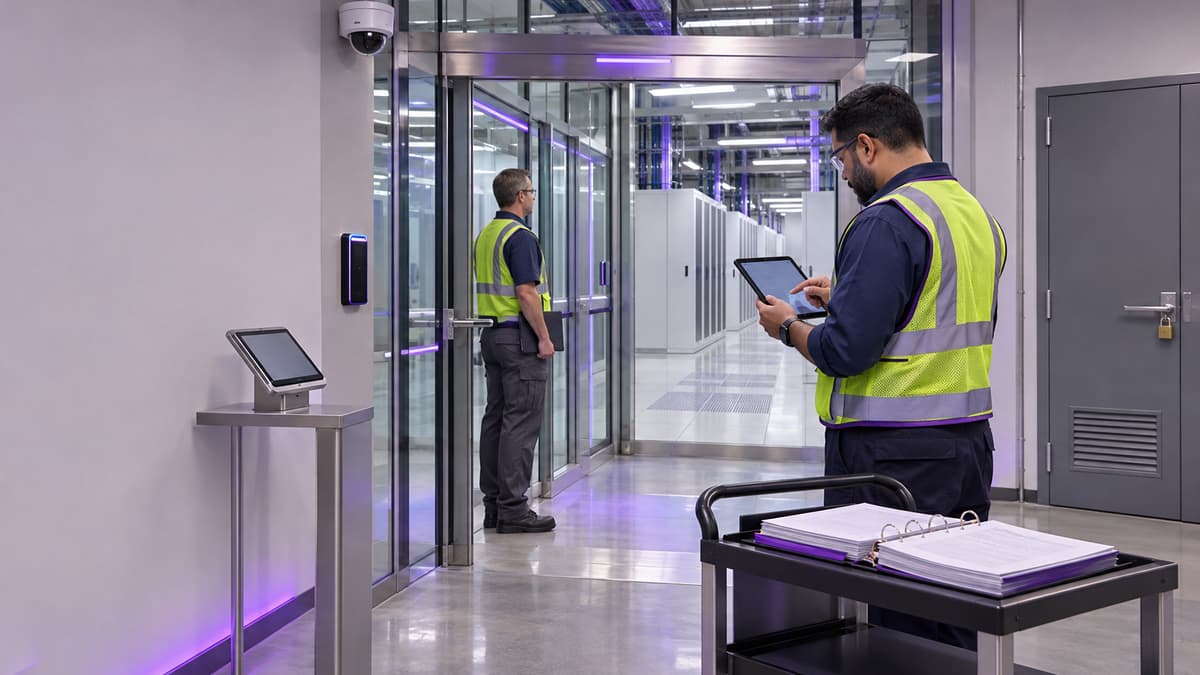
- Does security know which contractors, doors, escorts, or cameras need attention?
- Does EHS know about open permits, chemical work, hot work, or restricted spaces?
- Does the electrical team know which mechanical equipment is unavailable or on a temporary source?
- Does the mechanical team know about load changes, electrical work, or controls that may affect cooling?
- Does the manager on call know which decisions cannot wait for the next scheduled round?
This is not a reason to copy every message into the log. It is a reason to name the dependency and the communication owner.
6. Test whether the incoming crew can repeat the summary
The outgoing operator should not deliver a monologue and leave. Ask the incoming operator to repeat back the highest-risk exceptions, the immediate rounds, and the next decision owner. This read-back can be brief, but it reveals whether the information was understandable.
Use a consistent closeout sequence:
- State the current operating posture.
- Identify the top three exceptions by safety or uptime impact.
- Point to the controlling procedure, permit, drawing, or work order.
- Name the next verification and the person responsible.
- Record unresolved questions and the escalation deadline.
If a handover cannot be completed face to face, use a documented remote read-back or call. A note marked “FYI” is not a substitute for an acknowledged transfer of responsibility.
7. Review the handover process after an event
Managers should periodically compare the handover record with alarms, work orders, access records, and incident timelines. Look for recurring weaknesses:
- The same alarm is carried forward without an owner.
- A temporary state is documented but never closed.
- A work order contains the detail while the shift log contains only a vague reference.
- The incoming team repeatedly asks for the same equipment location or drawing.
- A handover omits work performed by a contractor or a remote team.
Use those observations to adjust the form, staffing, procedure, or training. A handover audit should improve the system, not become a search for someone to blame.
Which Training Fits This Situation
Shift handover quality depends on both communication habits and technical judgment. The person receiving the handover must understand what a normal state looks like, recognize when a condition is abnormal, and know which action requires authorization rather than improvisation.
For facility managers and lead operators, Data Center Operations Management provides a useful foundation for organizing daily rounds, operating responsibilities, and coordination across teams. Incident Response & Troubleshooting fits teams that need to turn an alarm or equipment anomaly into a controlled response with clear escalation. Preventive Maintenance Planning helps managers connect open work orders and temporary repairs to the next shift instead of treating them as separate administrative items.
For a new technician, pair the operations course with the technical track that matches the role. An electrical technician may need Power Systems & Electrical Fundamentals, Power Distribution Systems Fundamentals, and Electrical Safety & Best Practices. A mechanical technician may need HVAC Systems Troubleshooting Essentials and Mechanical Systems & Equipment Maintenance. A controls-focused operator may benefit from Monitoring, Automation & BMS Systems and Building Automation Systems (BAS) Fundamentals.
The Operations & Reliability Bundle is a practical fit when a team needs common operating language across managers, technicians, and coordinators. It includes Data Center Operations Management, Disaster Recovery & Business Continuity, Preventive Maintenance Planning, Incident Response & Troubleshooting, Business Continuity and Disaster Recovery Planning Training, Building Maintenance Fundamentals, Facility Management Fundamentals, Roofing Systems Maintenance Fundamentals, Server Room Ergonomics and Manual Handling Training, and Data Center Raised Floor and Confined Space Awareness Training.
Managers can use the handover audit to build a role-based plan rather than assigning the same list to everyone. Start with the risks the employee can influence, then add the course that supports the relevant procedure. These are self-paced knowledge and best-practice courses, not certification exams. Learners receive a certificate of completion after finishing, which can support a documented training program without implying regulatory approval or a license.
Common Mistakes to Avoid
- Treating the shift log as a substitute for the approved switching, energy-control, fire impairment, or incident procedure.
- Writing “all normal” when one system is on manual control, bypass, reduced redundancy, or an unverified remote indication.
- Listing an alarm without its equipment identifier, start time, current state, owner, and next check.
- Using a temporary condition without an expiration or restoration review.
- Assuming the incoming crew knows the location of a panel, valve, isolation point, permit board, or temporary barrier.
- Copying every low-priority message into the handover while burying the three conditions that could affect safety or uptime.
- Allowing contractors or remote operators to work from a separate information stream that never reaches the shift team.
- Closing a handover because the form was submitted, even though the incoming operator did not acknowledge the exceptions.
- Measuring handover quality by word count instead of whether the next crew can make a safe, informed decision.
Key Takeaway
A reliable shift handover makes the facility's exceptions visible: what changed, why it changed, who owns the next decision, and what evidence will show that normal operation was restored. This is a management control as much as a communication routine because it links alarms, permits, work orders, field observations, and training to the same operating picture.
This week, observe one real shift change and ask the incoming operator to identify the three highest-risk exceptions without prompting. Use the gaps you find to revise one handover field and assign one targeted course from the Operations & Reliability Bundle or the employee's technical track.
Sources
- Occupational Safety and Health Administration, The Control of Hazardous Energy (Lockout/Tagout), 29 CFR 1910.147
- National Institute of Standards and Technology, Contingency Planning Guide for Federal Information Systems, SP 800-34 Rev. 1
- U.S. Department of Energy, Operations and Maintenance Best Practices Guide: Release 3.0