The Operational Question
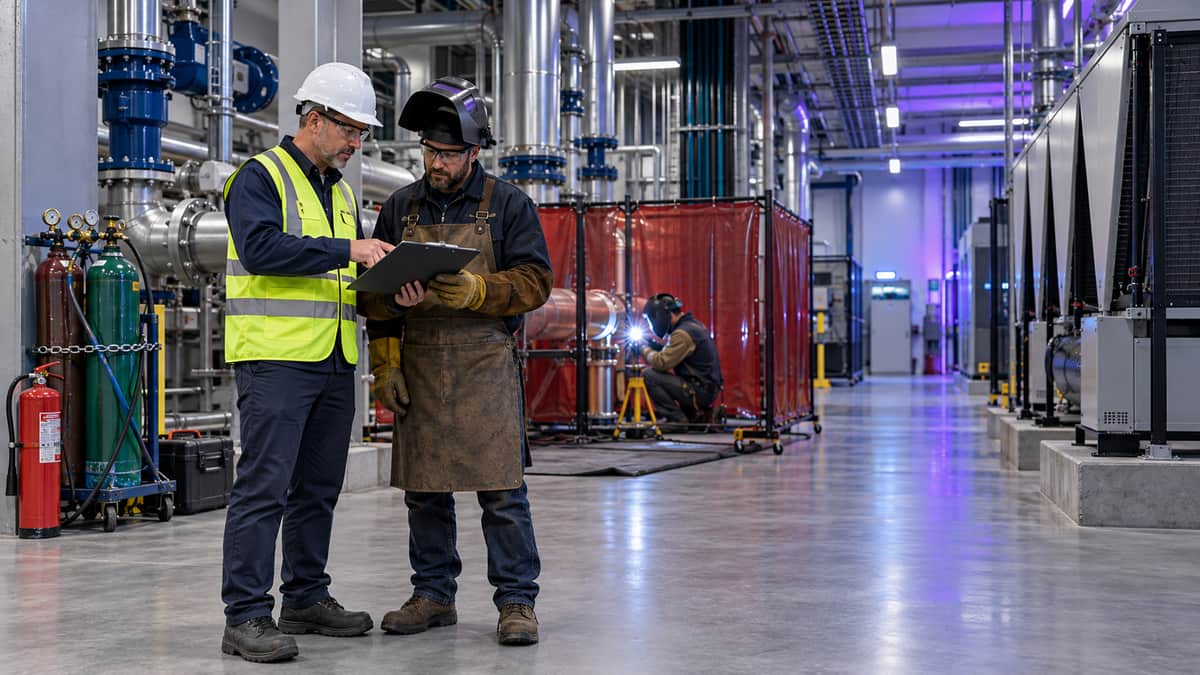
When a contractor needs to weld, braze, solder, cut, grind, or use another open-flame or spark-producing process inside or near a data center, who decides that the work is ready to begin? A hot work permit is not just a form for the contractor file. It is a coordination tool that connects the work area, fire protection systems, nearby equipment, temporary barriers, gas cylinders, fire watch, and post-work monitoring.
This matters because a small maintenance task can introduce ignition sources into a facility built around continuous operation. A welding repair near a chilled-water line may be physically outside the white space but still close to cable pathways, combustible packaging, air intakes, battery rooms, loading areas, or concealed spaces. A permit process that focuses only on the torch can miss the conditions that allow heat, sparks, smoke, or hot slag to travel.
This guide gives facilities managers a practical way to decide whether a hot work request is ready for approval. It explains what to verify before work starts, how to coordinate with operations and security, what the fire watch should record, and how to build a role-based training plan around the decision. The goal is not to replace the site's fire prevention program, impairment procedure, or qualified contractor supervision. The goal is to make the pre-task review specific enough that the right people can stop unsafe work before it begins.
Who This Affects
Hot work readiness is a cross-functional issue. The person holding the welding lead may control the task, but the facility manager controls many of the conditions that determine whether that task can be performed safely.
- Facility managers and critical facilities engineers approve the work area, coordinate impairments, and confirm that the job will not undermine operating requirements.
- Maintenance supervisors and technicians define the task, isolate equipment, protect nearby components, and verify that the work package matches field conditions.
- Electrical, mechanical, and HVAC contractors provide qualified workers, equipment inspections, cylinders, hoses, screens, and task-specific controls.
- EHS managers and fire prevention leaders review the permit process, combustible loading, fire watch expectations, and incident reporting requirements.
- Security and access-control staff control contractor entry, escort movement, delivery of cylinders, and access to restricted rooms.
- NOC, operations, and building automation teams need to know when work can affect alarms, ventilation, smoke detection, chilled-water service, or a critical operating area.
- Commissioning agents and project managers use the same controls during construction, turnover, warranty work, and modifications in partially occupied halls.
The setting changes the review. An enterprise facility may have a small in-house crew and a familiar maintenance shop. A colocation site may have several tenants, shared loading routes, and strict notification windows. A hyperscale campus may have construction crews working beside live buildings. An edge site may have a small team, limited storage, and no permanent fire-prevention specialist on site. The permit must work in each environment without becoming an informal approval for whatever the contractor wants to do next.
What Can Go Wrong
The most visible hazard is ignition. Sparks and hot slag can travel farther than the person doing the work expects, especially near penetrations, cable trays, raised floors, wall cavities, roof openings, or air movement from supply and return systems. Combustible material may be hidden behind a temporary partition or below a floor panel. A fire can begin after the torch is shut off because heated metal, insulation, dust, or debris remains hot.
There are also operational hazards that do not look like fire hazards at first:
- A detector impairment may be started without a documented compensating measure.
- A contractor may shut a damper, fan, or local exhaust system that operations depends on for temperature control.
- A welding machine or temporary power connection may be placed where it blocks an electrical room egress route or service clearance.
- A cylinder delivery may cross a security boundary without the right escort or staging plan.
- Smoke, dust, or fumes may enter an occupied control room or trigger alarms that operators are not prepared to interpret.
- A fire watch may leave to answer a radio call, assuming another person is still watching the work.
The consequences can include burns, eye injuries, smoke exposure, equipment contamination, unwanted alarm activation, loss of a cooling zone, or an outage caused by an emergency response that was not coordinated with the operations team. A fire department response can also disrupt access, tenant activity, and maintenance windows even when no equipment is damaged.
Standards and regulations provide useful context, but they do not make the site-specific decision for the manager. OSHA's general requirements for welding, cutting, and brazing address fire prevention, suitable fire extinguishing equipment, fire watches, and precautions around combustible materials. NFPA 51B is a widely used reference for fire prevention during welding, cutting, and other hot work. The facility's adopted codes, insurer requirements, owner standards, and permit procedure may add controls. The manager should identify which requirements govern the site and make them visible in the work package rather than assuming a contractor's generic permit covers every location.
What Managers Should Check
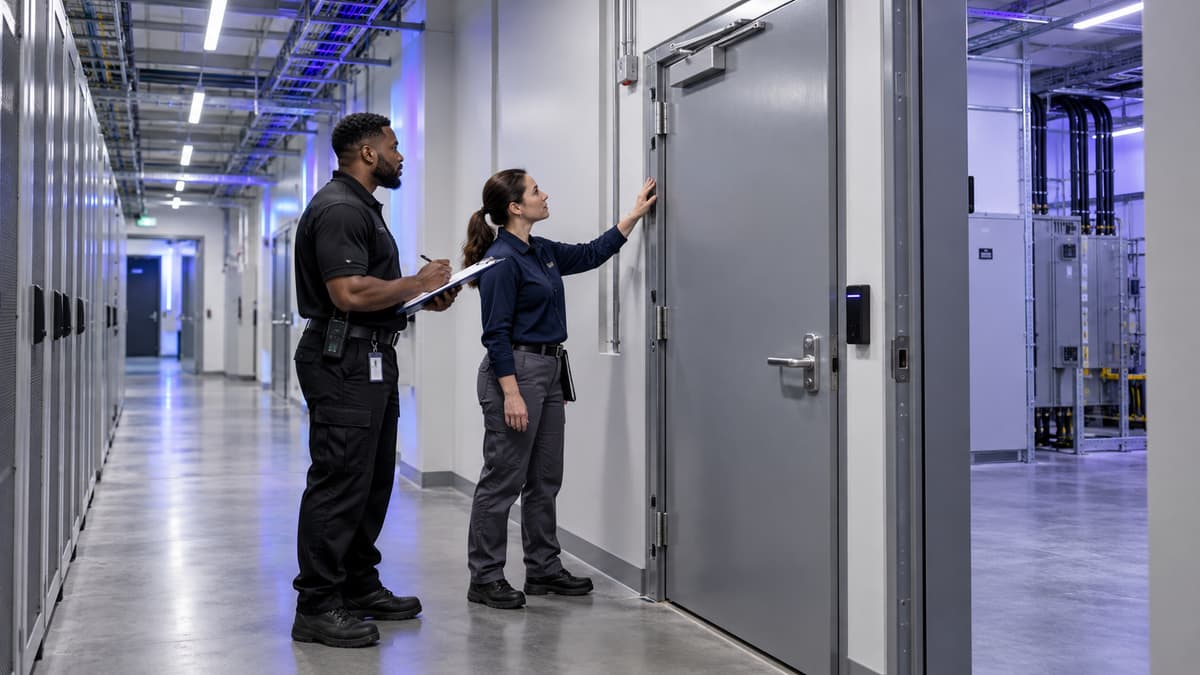
Use the following review before approving the permit. The checklist is most effective when the manager, task supervisor, and operations representative walk the area together. A document review alone cannot reveal a concealed cable route, an open penetration, or an unplanned access conflict.
- Define the exact task and boundary. Record what will be welded, cut, brazed, or ground; where it will happen; the planned start and stop time; and who is responsible for the work. Mark the boundary on a drawing or photograph. “Mechanical room” is not precise enough if the room contains multiple systems and access points.
- Confirm whether hot work is truly necessary. Ask whether a prefabricated part, cold-cutting method, bolted connection, mechanical coupling, or off-site repair can achieve the same result. A different method may reduce the ignition risk and shorten the maintenance window. This is a decision point, not a challenge to the contractor's expertise.
- Inspect the work area above, below, and behind the task. Check the floor, ceiling, adjacent rooms, wall cavities, cable trays, pipe chases, raised-floor void, roof penetrations, and temporary construction barriers. Look for cardboard, plastic, insulation, packaging, wood, solvents, aerosols, dust accumulation, and other combustible material. Do not assume a noncombustible-looking wall is a complete barrier.
- Verify equipment isolation and operating impact. Identify valves, electrical sources, rotating equipment, pressure sources, and controls that must be isolated. Confirm the lockout/tagout plan where hazardous energy is present. If the work touches a chilled-water line, fuel line, domestic-water system, or fire-protection component, define the isolation and restoration steps. Notify the operations desk about any alarm, ventilation, temperature, or access change.
- Review fire protection status. Verify that sprinklers, detection, suppression, fire pumps, and alarm notification are available for the work area. If an impairment is required, use the site's impairment procedure before work begins. Document the impairment owner, notification list, compensating measures, restoration target, and escalation path. A permit should not be used to quietly authorize an unplanned impairment.
- Assign a capable fire watch. Name the fire watch in the permit and define the area that person must continuously observe. The fire watch needs authority to stop work, a reliable communication method, access to the correct extinguisher, and enough knowledge to recognize sparks or heat traveling outside the immediate task. If the work continues through breaks or shifts, document the handoff rather than relying on an informal verbal transfer.
- Check tools, cylinders, and temporary power. Inspect leads, hoses, regulators, torch handles, flashback arrestors where applicable, grounding, guards, and machine condition. Secure cylinders upright, protect them from vehicle traffic and heat, and establish a route that does not compromise egress or restricted-area controls. Verify that temporary power is suitable for the equipment and does not overload a convenience circuit or create a trip hazard.
- Control sparks, fumes, and access. Install welding screens and noncombustible blankets as appropriate, but do not use them to hide an uninspected opening. Plan ventilation without sending fumes into occupied areas or disrupting critical airflow. Establish a clean route for the contractor and keep nonessential personnel outside the boundary. Security should know who is authorized to enter, what equipment arrived, and when it must leave.
- Set the post-work observation period. The permit should state who checks the area after the torch is off, what locations must be revisited, and when the permit closes. The responsible person should inspect adjacent spaces and concealed areas that could retain heat. If the site procedure requires a longer fire watch or monitoring period, record the actual end time and any abnormal finding.
- Close the loop. At completion, confirm that equipment is restored in the correct sequence, alarms and impairments are cleared, temporary barriers and cylinders are removed, and the work area is clean. Ask the operations desk to acknowledge normal status. Retain the permit, photos, notifications, and any lessons learned according to the site's recordkeeping process.
A practical go or no-go conversation
Before approval, the manager should be able to answer these questions without guessing:
- What exactly is the ignition source, and where can heat or slag travel?
- What combustible materials or concealed spaces are within the affected area?
- Which alarms, suppression systems, ventilation systems, or operating procedures will change?
- Who has the authority to stop the job, and how will that person communicate a stop-work decision?
- What must be verified before the permit can be closed?
If any answer is unclear, pause the permit and resolve the uncertainty. A delayed start is easier to manage than an emergency created by an incomplete boundary review.
Which Training Fits This Situation
The training need depends on what each person controls. A contractor who performs the hot work needs task-specific qualification and site orientation. A facility manager needs to evaluate conditions, coordinate people, and recognize when the job should be delayed or rejected. A technician needs to understand isolation, adjacent equipment, and the site's stop-work expectations.
Facility Environmental Compliance is a useful foundation for managers who coordinate permits, contractor controls, environmental conditions, and documentation. It can support a broader EHS plan that links hot work to fire prevention, waste handling, spill response, and facility procedures.
Building Maintenance Fundamentals fits supervisors and facility staff who need a common vocabulary for building systems, access routes, penetrations, mechanical spaces, and maintenance planning. It is especially relevant when hot work occurs during repairs to piping, supports, doors, roof systems, or building services rather than inside a dedicated shop.
Electrical Safety & Best Practices helps electrical and multi-trade teams recognize how temporary power, energized equipment, service clearances, grounding, and isolation interact with a maintenance task. It is not a substitute for the site's electrical safety program or job-specific authorization, but it can strengthen the shared baseline before a contractor works near switchgear, panels, UPS equipment, or distribution paths.
For a facilities department that needs coverage across roles, the Security & Compliance Bundle can support a role-based plan that includes Facility Environmental Compliance, Access Control & Physical Security, Incident Response & Troubleshooting, and related knowledge areas. A manager can assign the shared foundation to supervisors and coordinators, then add focused courses for technicians or security staff. Learners receive a certificate of completion after finishing the selected course. That certificate documents course completion; it does not represent a regulatory license, certification, or approval by OSHA, NFPA, or another standards organization.
A practical team plan might look like this:
- Facility managers complete Facility Environmental Compliance and review the site's hot work and impairment procedures.
- Maintenance supervisors add Building Maintenance Fundamentals and run a permit walkthrough with a real work area.
- Electrical or mechanical technicians take the relevant technical course and practice identifying isolation points and concealed-space exposures.
- Security staff review Access Control & Physical Security and rehearse contractor entry, cylinder movement, escort, and emergency access.
- The operations desk participates in a short tabletop exercise covering alarm changes, stop-work calls, restoration, and permit closure.
The important choice is not simply whether to buy one course or a bundle. It is whether every role that can approve, perform, monitor, or respond to hot work has a defined learning outcome and a way to practice it at the site.
Common Mistakes to Avoid
- Treating the contractor's generic permit as the facility's complete risk assessment.
- Describing the work area too broadly to identify concealed spaces, adjacent rooms, or shared access routes.
- Removing combustible material from the visible floor while ignoring the raised-floor void, ceiling space, or opposite side of a wall.
- Assuming a fire watch is effective without naming the person, boundary, communication method, and stop-work authority.
- Starting before a required fire-protection or alarm impairment is documented and communicated.
- Using a welding screen as a substitute for inspecting what is behind or above the screen.
- Letting a fire watch perform another task that divides attention during active hot work or the required post-work period.
- Forgetting that cylinders, leads, hoses, and temporary power create their own egress and security issues.
- Closing the permit when the torch is off instead of after the area, alarms, equipment, and records are verified.
- Measuring the process by the number of permits issued rather than by the quality of pre-task reviews and closeouts.
Key Takeaway
Hot work near critical equipment is manageable when the permit is treated as a live coordination decision rather than a signature page. Facilities managers should define the boundary, inspect concealed exposures, coordinate fire protection and operations, assign an empowered fire watch, and verify restoration before closing the job. This week, choose one upcoming maintenance task and walk its proposed hot work area with the supervisor, operations representative, and security lead before anyone brings in a torch.
Sources
- Occupational Safety and Health Administration, Welding, Cutting, and Brazing
- National Fire Protection Association, NFPA 51B: Standard for Fire Prevention During Welding, Cutting, and Other Hot Work
- Occupational Safety and Health Administration, Fire Prevention Plans
- National Fire Protection Association, Hot Work Safety