The Operational Question
Before a data center technician lifts a raised-floor panel, can the team show that the work area, the panel, the underfloor space, and the equipment below it are ready for access? A raised floor can conceal power distribution, network cabling, chilled-water piping, leak-detection cable, grounding conductors, and structural supports. Opening one panel may look like a small housekeeping task, but an unplanned opening can create a trip hazard, disturb airflow, expose a person to electrical or water hazards, or interrupt a customer area.
This guide gives facility managers, shift leads, electricians, low-voltage technicians, and contractors a practical pre-task readiness method. It explains how to identify the reason for access, verify the work zone, control the removed panel, inspect the underfloor condition, coordinate with electrical and mechanical owners, and close out the work. The goal is not to make every panel removal slow. The goal is to make routine access predictable, documented, and compatible with the site's safety, uptime, and change-control expectations.
Who This Affects
Raised-floor access is common in facilities that use underfloor air distribution or route services below the finished floor. The same panel may be opened by different roles for very different reasons.
- Data center technicians may need to inspect cable pathways, replace a floor grate, investigate a sensor alarm, or support a rack installation.
- Electricians and power technicians may need visibility of underfloor feeders, whips, grounding, PDU connections, or equipment clearances. Their work must follow the employer's electrical safety program and task-specific authorization.
- Low-voltage and network cabling teams may work around fiber pathways, copper cable, patching routes, and bend-radius concerns. A panel removal plan should protect both the worker and the cabling.
- Cooling and facilities mechanics may inspect condensate, chilled-water, drain, or leak-detection conditions below a floor. They need to understand how access can affect airflow and nearby equipment.
- BMS, DCIM, and NOC personnel may request a field check after an alarm, but the person who sees an alarm on a screen may not be the person authorized to open a panel.
- Facility managers and EHS leads need a consistent method for work permits, contractor orientation, housekeeping, access control, incident learning, and evidence of completion.
The risk profile also changes by site type. An enterprise room may have a small team and limited night coverage. A colocation site may require escorting, customer notification, and protection of cage boundaries. A hyperscale campus may split responsibility among controls, electrical, mechanical, security, and construction groups. An edge room may have less redundancy and fewer people available to verify the condition.
What Can Go Wrong
The first problem is often not the panel itself. It is the assumption that the space below the panel is empty or harmless. Underfloor areas can contain live electrical conductors, cable supports, sharp edges, standing water, condensate, debris, hot surfaces, or pathways that are not obvious from the room view.
Common consequences include:
- Electrical exposure. A removed panel can place a person closer to energized conductors, power whips, junction boxes, PDU connections, or grounding paths. A visual inspection is not permission to touch, move, or work on electrical equipment. If the condition is unclear, stop and involve the qualified electrical authority for the site.
- Falls and dropped objects. A missing panel creates an opening that can catch a foot, cart wheel, or tool. A panel leaned against a rack can slide, fall, or damage a cabinet. Small fasteners and tools can also fall into a pathway or onto equipment.
- Airflow disruption. Removing a perforated panel, moving a grate, or leaving an opening in a supply path can change cold-air delivery. In a dense room, a local change can affect inlet temperature, pressure balance, or containment behavior.
- Cable and fiber damage. Pulling a panel against a cable, stepping on a pathway, or using the wrong lifting point can crush insulation, exceed a fiber bend radius, or disturb labels and separation.
- Water and contamination. A leaking pipe, condensate problem, or wet insulation may be hidden below the floor. Dust, rust, and debris can also be pulled into equipment or spread through a room when a panel is moved.
- Uncontrolled service impact. If the reason for access is an alarm or failed device, an improvised inspection may expand into a maintenance action without an approved method of procedure, risk review, or customer communication.
- Weak closeout evidence. If nobody records what was found, which panel was opened, and whether the floor was restored, the next shift may inherit an unsafe condition with no clear owner.
Standards and regulations provide important context, but they do not replace the site's procedures. OSHA's walking-working-surfaces requirements address hazards such as openings and safe access. Electrical safety expectations also depend on the equipment, task, approach boundary, and qualifications of the people involved. A course certificate does not make a person qualified for electrical work, confined-space entry, or a site-specific maintenance task.
What Managers Should Check
Managers can make raised-floor access safer by using a short readiness check before the panel is touched. The check should be proportional to the task. A quick visual inspection in an empty maintenance area is not the same as opening a panel beside a live PDU during a customer-impacting alarm.
1. Define the reason and boundary
Write down what the team is trying to learn or change. Examples include locating a leak-detection alarm, verifying a cable route, inspecting a support, checking a drain, or preparing a rack installation. The request should identify the room, row, panel location, equipment relationship, and expected duration.
Ask:
- Is this inspection only, or could it become repair or adjustment work?
- Does the task require an approved work order, change record, MOP, or EOP?
- Who owns the final decision to stop, escalate, or return the area to service?
- Is customer or security coordination needed before access begins?
2. Walk the room before opening the panel
Look at the approach route, adjacent racks, floor condition, lighting, housekeeping, and available space for the panel. Check whether carts, ladders, temporary barriers, or tools will block an aisle or an exit. Confirm that the panel is not supporting a cabinet, cable tray, temporary cover, or other load.
Identify nearby hazards before the work starts:
- Energized electrical equipment and its required clearance.
- Water, condensate, chilled-water, or drain systems.
- Airflow grates, containment boundaries, and sensitive equipment in the supply path.
- Fiber, copper, busway, grounding, and other pathways that could be disturbed.
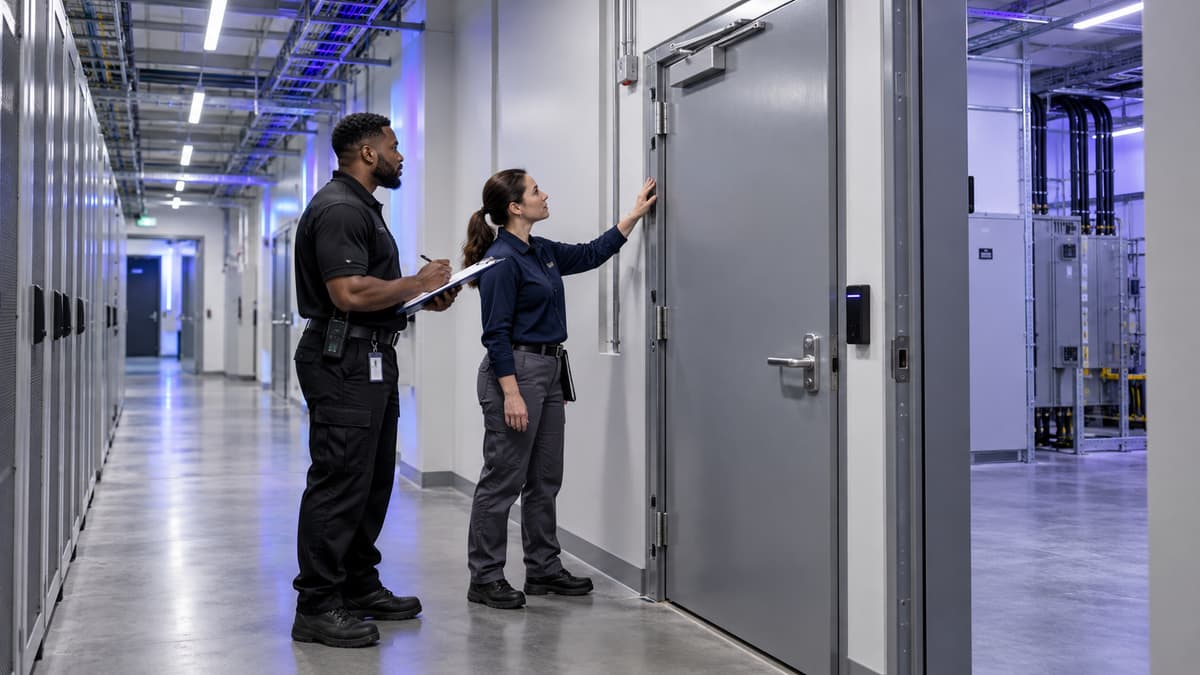
- Fire protection, smoke detection, access control, and emergency egress features.
3. Choose the right people and tools
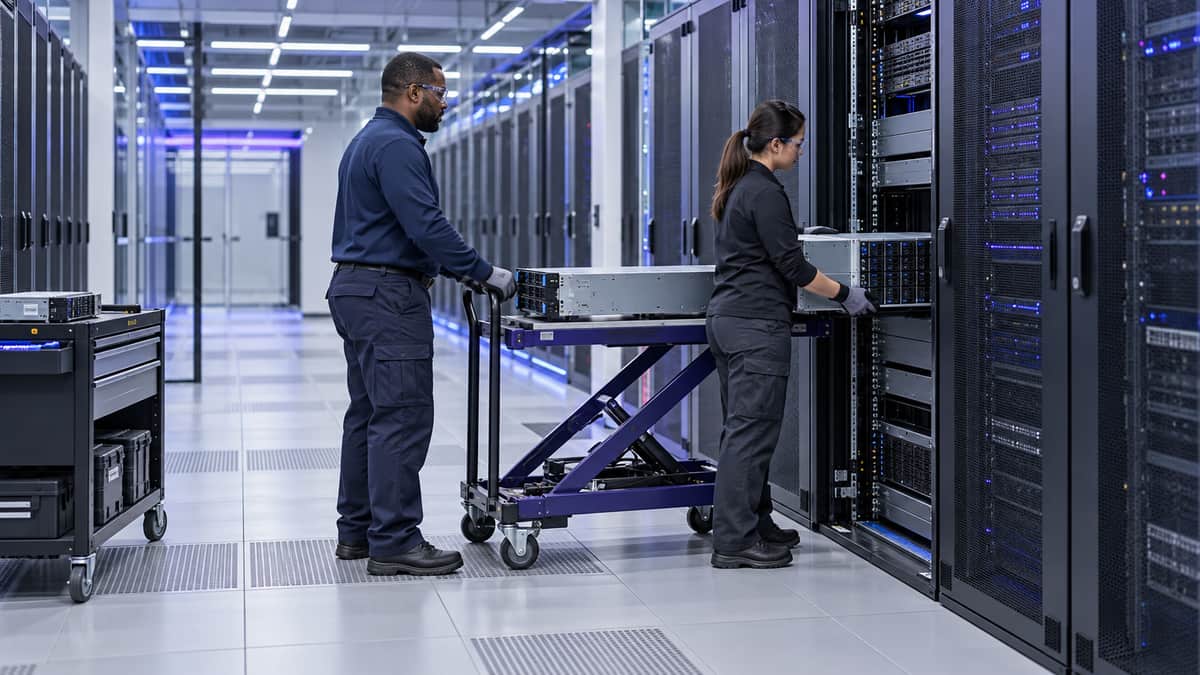
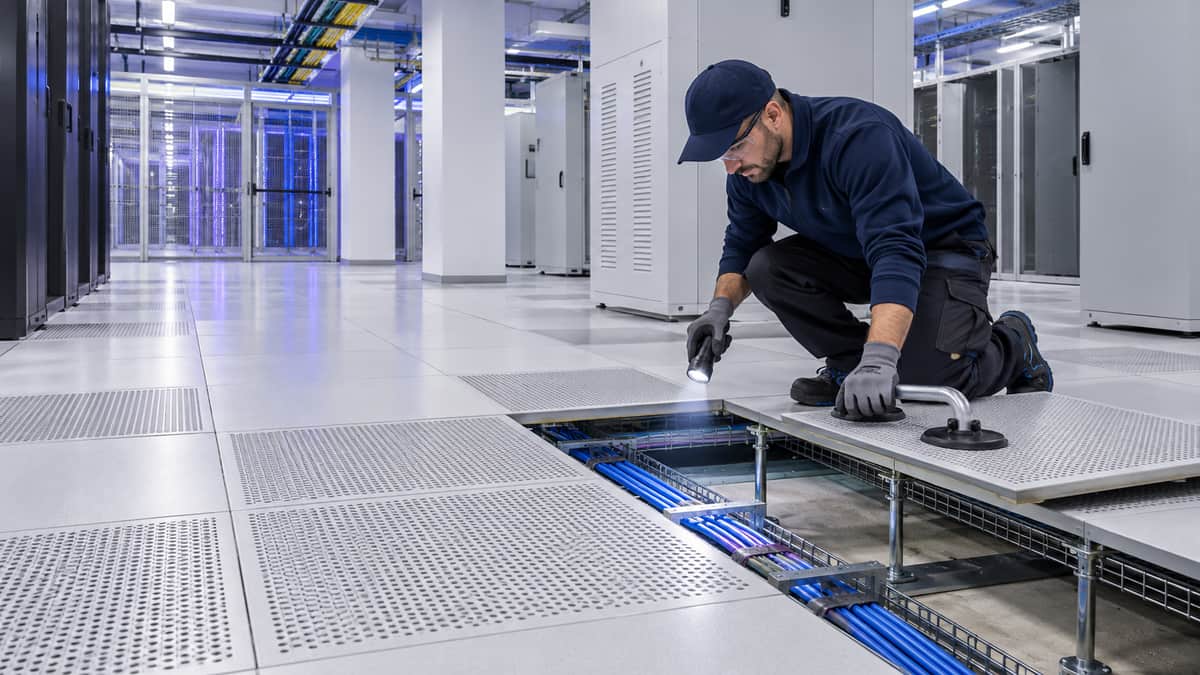
Use a suitable panel lifter or suction tool, gloves appropriate to the task, eye protection, lighting, barriers, and a stable place to stage the panel. Do not improvise with a screwdriver, pry bar, or a nearby rack handle. The person who removes the panel should understand its weight, dimensions, surface condition, and how it will be controlled while open.
If the inspection could encounter electrical parts, water, restricted access, or a confined-space condition, the supervisor should identify the required qualified person and stop-work criteria before the task begins. Do not send a technician into an underfloor space merely because a panel is easy to remove. Entry, body positioning, ventilation, communication, and rescue considerations must be addressed under the employer's program when the task goes beyond surface-level inspection.
4. Control the open area
Set a visible boundary around the opening. In a shared aisle, use a barrier that people can see from both directions. Keep the removed panel flat and out of the travel path. If the opening must remain for more than a brief inspection, provide a designed temporary cover or other control approved by the site. A loose scrap of plywood or a cardboard sheet is not a reliable floor-control method.
Record the exact panel location with a row, tile, grid, or asset reference. A photo can help with closeout, but it should not show customer information or sensitive security details that do not belong in the work record.
5. Inspect without reaching into uncertainty
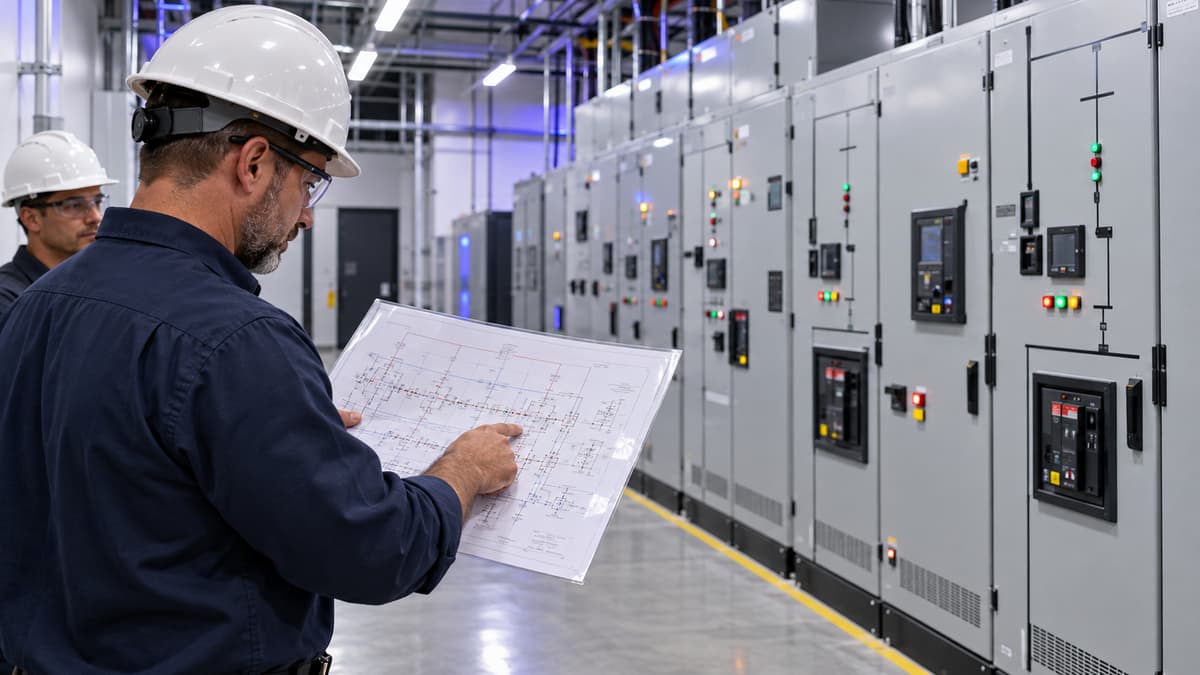
Use lighting to inspect the visible space. Look for water, corrosion, heat damage, loose supports, sharp edges, damaged insulation, unprotected conductors, overloaded cable pathways, debris, and signs that the panel or pedestal has shifted. Compare what is visible with drawings, as-builts, cable schedules, or the site asset record when those references are available.
Do not move cables, valves, electrical covers, or unfamiliar components to improve the view. If something blocks the inspection, pause and involve the owner of that system. If water is present near electrical equipment, do not enter or touch the area until the hazard has been assessed and controlled.
6. Protect the operating state
Before opening the panel, confirm whether the room is in normal operation, a maintenance window, a recovery state, or an active incident. Check current alarms and recent work that could explain a changed condition. If the panel sits in a cooling supply path, understand whether removing it changes airflow enough to require a temporary grate, alternate panel, or additional monitoring.
In a colocation environment, coordinate with the control room and customer-facing process. In an enterprise or edge site, make sure the person working alone can reach the escalation contact. In a large campus, name the controls, electrical, mechanical, and operations owners who need to be notified if the inspection finds something outside the original scope.
7. Restore and verify
Before closing the work order, check that the underfloor area is free of tools, packaging, loose fasteners, and absorbent material. Reinstall the correct panel in the correct orientation. Confirm that the panel is seated, stable, flush, and not rocking. Restore a grate, blanking panel, or airflow component if one was removed. Remove barriers only after the opening is controlled.
The closeout should state what was inspected, what was found, what was not inspected, what changed, and who accepted the area. If the condition needs follow-up, create a separate corrective action with an owner and due date rather than burying it in a general note.
Which Training Fits This Situation
Raised-floor access is a cross-functional readiness problem. The best plan gives each role enough system context to recognize a hazard and enough task-specific practice to work within its authority.
For technicians and supervisors who need a foundation for floor panels, underfloor pathways, housekeeping, access control, and facility work, Raised Floor & Confined Space Awareness is a direct fit. It can support a shared vocabulary for floor systems and restricted areas, but it does not authorize entry or replace the employer's confined-space program.
Building Maintenance Fundamentals is useful for facilities staff who coordinate panels, pedestals, access routes, building services, and maintenance planning. Electrical Safety & Best Practices is relevant for electricians and multi-trade teams who must understand the relationship between access work, energized equipment, clearances, and the site's electrical safety program. Data Center Operations Management helps facility managers connect a small access task to change control, work orders, incident response, documentation, and operational ownership.
For a broader operations team, the Operations & Reliability Bundle can provide a shared learning layer across operations management, preventive maintenance, incident response, building maintenance, and raised-floor or confined-space awareness. A role-based plan might look like this:
- Assign Raised Floor & Confined Space Awareness and Building Maintenance Fundamentals to technicians who perform routine access and inspection.
- Assign Electrical Safety & Best Practices and the site's electrical-specific training to electricians and authorized power personnel.
- Assign Data Center Operations Management and Preventive Maintenance Planning to facility managers, planners, and shift leads.
- Add Monitoring, Automation & BMS Systems or DCIM Platform Fundamentals when panel access is triggered by a leak, temperature, or controls alarm.
- Use a supervised walkdown, a tabletop scenario, and the actual site closeout form to connect course concepts to the facility.
These are self-paced knowledge and best-practice courses. Learners receive a certificate of completion after finishing. The certificate supports a training program, but it is not a regulatory certification, license, CEU, PDH, or proof of authorization. The employer and site owner still determine qualifications, supervision, procedures, and equipment-specific readiness.
Common Mistakes to Avoid
- Opening a panel before identifying the work boundary. A request to “take a look” can quietly become repair work or an electrical investigation.
- Using a nearby rack, cable tray, or door as a panel staging area. The panel can fall, block access, or damage equipment.
- Leaving the opening visible only from one direction. People approach data center aisles from both ends, especially during alarms and maintenance windows.
- Treating the underfloor area as low risk because it is out of sight. The hidden space may contain power, water, sharp edges, heat, and sensitive cabling.
- Moving an unfamiliar cable or component to get a better photograph. Stop and involve the owner instead of turning inspection into an uncontrolled adjustment.
- Ignoring airflow while the panel is open. A missing panel or grate can affect the local cooling pattern and should be addressed in the work plan.
- Closing the panel without checking the final fit. A rocking, reversed, damaged, or incorrectly rated panel is a new trip and airflow hazard.
- Recording only “no issue found.” A useful record identifies the location, scope, observed condition, and any limits of the inspection.
Key Takeaway
Raised-floor access is a small task with a large number of hidden interfaces. A disciplined team defines the purpose, checks the room, controls the opening, avoids reaching into uncertainty, protects the operating state, and documents the restoration. This week, choose one frequently accessed floor panel and walk the complete process with a new technician, including the exact stop-work and escalation points.